
Data security quick start
Screenshot note: Captured from the English interface. Some controls are still untranslated in this release; demo data names retain their original language.
Classify a few harvested tables/columns, then verify one access or masking requirement with business/security owners.
Before you begin
| Requirement | Check |
|---|---|
| Harvested objects | Correct source, names, meaning |
| Classification evidence | Owners can explain categories/levels |
| Stewards/reviewers | Rights and approval responsibilities |
| Test identities | Expected data scope for access tests |
Reuse approved frameworks rather than duplicating them.
1. Establish the framework
Use Classification design to configure levels/types, create nodes, define sensitivity and evidence, and associate legal provisions. Interface names may use Security Classification instead of Data Classification.
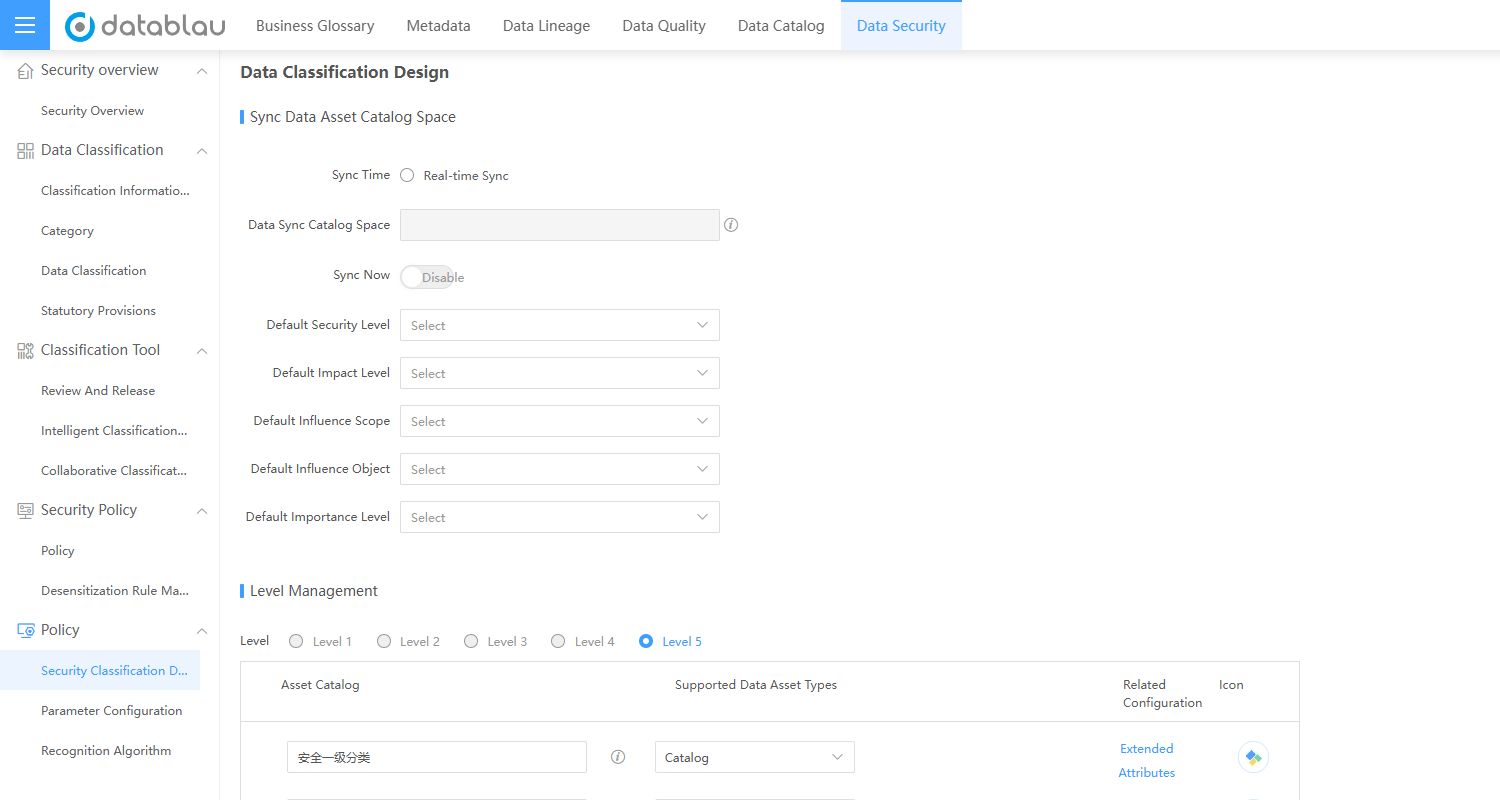
Verify target-type support and actual nodes/levels. Existing nodes restrict reductions in levels/types.
2. Classify a few objects
- Find To Classify objects under Collaborative Classification.
- Verify source/meaning and associate the right category.
- Review Pending Confirmation classes/levels.
- Edit incorrect values or Reclassify.
Check selections and individual levels. All pilot objects need explainable results; deferred objects stay distinct. See Collaboration.
3. Review and publish
- Submit confirmed results.
- Authorized reviewers open Review and Publish.
- Verify object/class/level/evidence; approve or reject for correction.
- Inspect success/failure counts and publication.
- Compare objects with the Overview.
Track unresolved/partial failures. Submission is not approval.
4. Verify access and masking as needed
Define one user's expected scope, create Policies, and follow Gateway quick start for JDBC masking. Query as the actual identity and check logs. Verify classification and enforcement separately.
Expand scope
Use Recognition after the pilot. Test positives/negatives, execute, review, publish. Scores are not final decisions. Begin with the Synthetic expression test; it saves no algorithm or classification.